
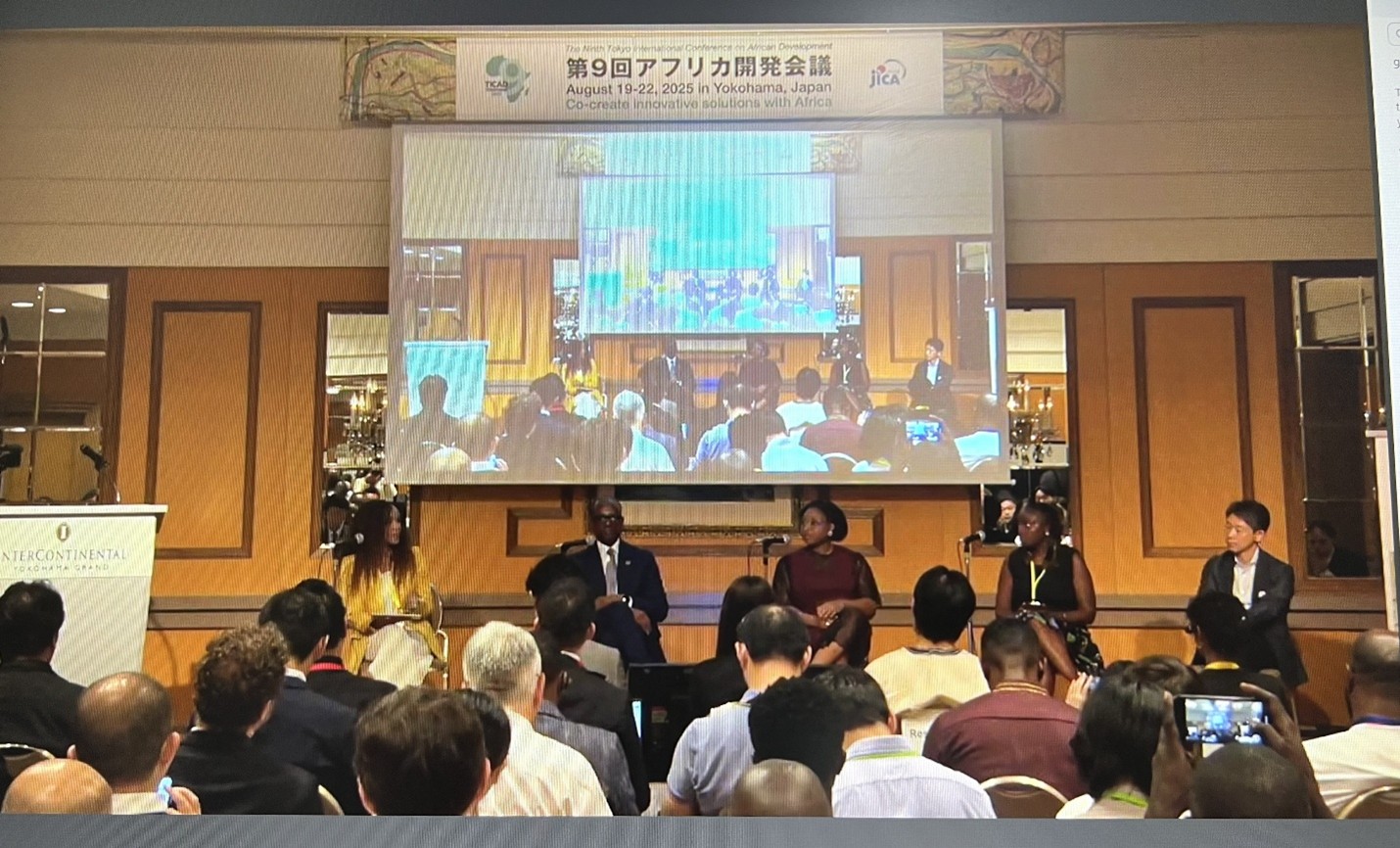
The 2025 AI and Africa Seminar gathered global experts to explore how artificial intelligence (AI) can drive inclusive growth and human capital development across the continent.
1. Introduction: A Turning Point for Africa’s AI Future
The seminar, jointly organized by JICA, UNDP, the World Bank, and leading academic institutions such as the University of Tokyo’s Matsuo Lab, marked a critical moment in redefining Africa’s role in the global digital economy.
With multilingual participation and diverse stakeholders, the event emphasized that AI is not just technological—it is deeply tied to human capital and inclusive development.
2. Opening Vision: Society 5.0 Meets African Realities
Japan’s Society 5.0 vision—integrating digital, physical, and social systems—was presented as a model for Africa’s transformation.
Real-world examples showed AI already improving drought prediction, traffic systems, and agricultural productivity across African countries.
3. Key Themes and Insights
a. AI Applications Across African Sectors
- Education – accelerated learning platforms
- Healthcare – diagnostics and maternal care
- Agriculture – climate prediction and crop optimization
- Urban planning – traffic and resource management
b. Infrastructure and Investment
Africa hosts less than 1% of global data centers despite its large population. New initiatives aim to bridge this gap through major investments and partnerships.
c. Human Capital Development
With only 1% of global AI talent, Africa faces a major skills gap. Initiatives like training 30,000 AI professionals aim to reverse this trend.
AI alone does not change society — people do.
d. Local Innovation
African initiatives such as Lelapa AI and Masakhane demonstrate the continent’s ability to develop context-aware technologies rooted in local realities.
e. Startup Ecosystem
Over 75 AI startups across Africa highlight growing innovation, though better coordination is needed.
4. Critical Questions Raised
- How can Africa retain AI talent?
- What skills do youth need?
- How should language diversity be handled?
- Will AI create or destroy jobs?
5. Challenges
- Infrastructure gaps
- Weak governance frameworks
- Limited funding
- Inclusion risks
- Employment concerns
6. Opportunities
- Young population advantage
- Leapfrogging development potential
- Strong international partnerships
- Growing startup ecosystems
7. Commentary and Analysis
Africa is not merely adopting AI—it is shaping its own models. Japan’s Society 5.0 approach offers a human-centered framework particularly relevant for Africa.
However, success depends on implementation. Commitments must translate into real outcomes.
8. Conclusion: Shaped for Africa or by Africa?
AI in Africa is no longer theoretical—it is already unfolding. The key challenge is ensuring it is locally grounded, inclusive, and globally competitive.
The question remains: Will Africa’s AI future be shaped for Africa—or by Africa?