
Overview
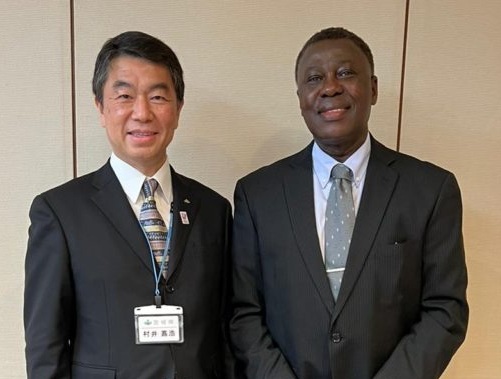
On February 18, 2022, I had the privilege, in my capacity as President of the African Association of Miyagi (AFAM), to participate in a roundtable discussion with Miyagi Governor Yoshihiro Murai. The discussion centered on an important and timely question: how to build a better Miyagi where foreign residents can play active roles in society and where every foreigner can live with peace of mind, dignity, and a sense of security.
This engagement was significant not only as a meeting with the Governor, but also as a recognition of AFAM’s growing role as a trusted voice representing the concerns, experiences, and aspirations of foreign residents in Miyagi Prefecture.
AFAM’s Role in Public Advocacy
AFAM has consistently worked to promote intercultural understanding, strengthen the voice of African and other international residents, and contribute to the creation of a more welcoming and inclusive community in Miyagi. Our participation in this dialogue reflected years of grassroots engagement, practical experience, and a deep commitment to ensuring that foreign residents are not merely present in society, but are able to participate meaningfully in its development.
Through our educational activities, community engagement, and support networks, AFAM has come to understand many of the everyday realities faced by foreign students, workers, and families living in the prefecture. It was from this position of lived experience and service that I shared AFAM’s perspectives during the roundtable.
Key Recommendations Presented
During the discussion, I appealed to the Governor to consider practical measures that could significantly improve the lives of foreign residents in Miyagi Prefecture.
- Introduce QR codes on official paper documents for foreigners so that, upon scanning, the information can be accessed in the language of their choice.
- Consider providing stipends or targeted financial support to foreign students with families to help ease the burden of living expenses.
- Promote the facilities and public services available across Miyagi Prefecture more effectively to foreign communities so that they can make full use of them.
- Expand job opportunities within Miyagi Prefecture to improve the retention of international students after graduation and encourage them to build their futures locally.
Why These Proposals Matter
These recommendations were not abstract suggestions. They emerged from real experiences and recurring challenges observed within the foreign community. Language barriers, financial pressures, limited awareness of public resources, and difficulty transitioning from student life into employment all affect whether foreign residents feel they truly belong and can build stable lives in Miyagi.
By addressing these issues, Miyagi Prefecture can move closer to becoming a model of inclusive regional development—one where diversity is treated not as a challenge to manage, but as a strength to cultivate.
A Broader Vision for Miyagi
The future of Miyagi depends in part on its ability to attract, retain, and empower international residents. Foreign students, professionals, entrepreneurs, and families contribute knowledge, skills, global networks, and cultural richness to the prefecture. When they are supported well, they do not only survive—they help communities flourish.
AFAM believes that building a secure and welcoming environment for foreign residents is not simply a matter of welfare. It is a matter of smart policy, human dignity, and long-term regional vitality.
A stronger Miyagi is one where foreign residents are not on the margins, but are recognized as active partners in shaping the prefecture’s future.
The Significance of the Meeting
The roundtable with Governor Murai represented an important step in bringing the voices of foreign residents closer to policymaking. It showed that dialogue between government and community organizations such as AFAM is both possible and necessary.
For AFAM, this was also an affirmation of the organization’s work over the years. It demonstrated that our advocacy, community-building, and persistent engagement are helping to create space for meaningful change.
Looking Ahead
AFAM remains committed to working with public institutions, universities, local communities, and international residents to help build a Miyagi that is more inclusive, more accessible, and more responsive to the realities of a diverse society.
Meetings such as this one are important milestones, but they must lead to continued dialogue, concrete policies, and sustained collaboration. AFAM will continue to speak, engage, and advocate so that foreign residents in Miyagi are not only heard, but supported in practical and lasting ways.