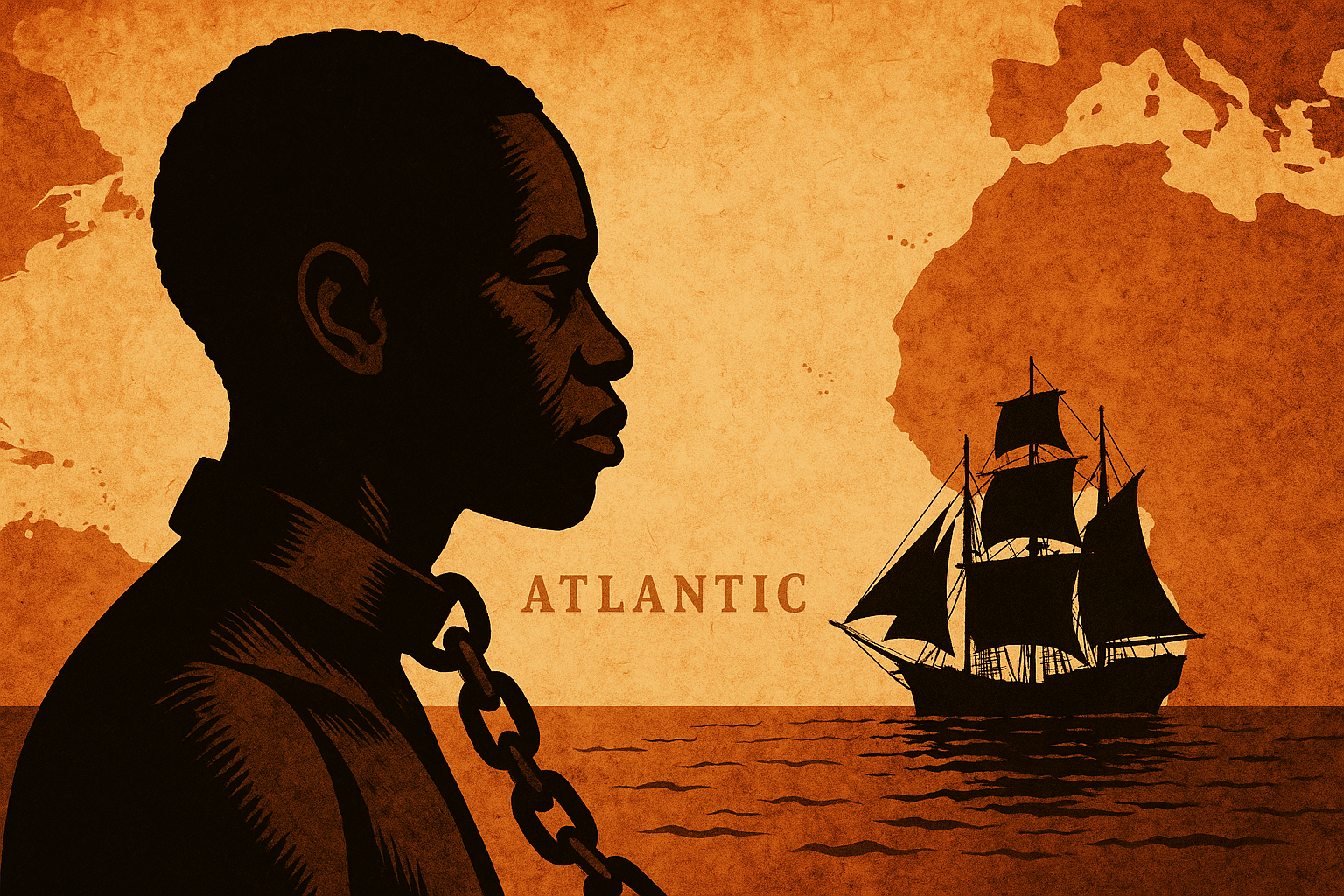
The Atlantic Ocean, calm and vast today, conceals beneath its waves one of humanity’s darkest legacies. For over four centuries, it served as the route of a brutal system—the Transatlantic Slave Trade—that forcibly uprooted more than 12 million Africans from their homelands.
Behind these numbers lie untold stories of pain, resistance, and survival that continue to shape Africa’s identity and its relationship with the world.
The Machinery of Dehumanization
Between the 15th and 19th centuries, European powers constructed a system that commodified human lives for profit. Africans were captured through warfare, betrayal, and coercion, then transported across the Atlantic under horrific conditions known as the Middle Passage.
Shackled, starved, and stripped of dignity, many perished at sea. Those who survived were forced into plantation labor, fueling the rise of Western economies and the industrial revolution.
Africa’s Pain and Fragmentation
The slave trade did more than export people—it destabilized entire societies. Families were torn apart, cultural systems disrupted, and governance structures weakened.
The loss of millions of young Africans stunted demographic growth and altered Africa’s development trajectory long before colonialism began.
Resistance and Survival
Despite unimaginable suffering, Africans resisted. Revolts occurred aboard ships, maroon communities formed, and cultural traditions survived in new lands.
Spiritual systems such as Vodun, Santería, and Candomblé preserved identity and resilience. The Haitian Revolution (1791–1804) became a powerful symbol of liberation and defiance.
The human spirit, even in chains, refused to be broken.
A Call for Global Conscience
At the United Nations General Assembly, Ghana’s President John Dramani Mahama described the slave trade as one of the most inhuman acts in history and called for reparations.
This call reflects a growing global consensus: justice is not about revenge, but about recognition, accountability, and restoration.
Reconnecting the Broken Links
Africa is rebuilding connections with its diaspora through initiatives such as Ghana’s Year of Return and heritage sites across West Africa.
These efforts represent healing, remembrance, and renewed solidarity across continents.
Towards Historical Justice
The demand for reparations goes beyond financial compensation. It is a call for truth, acknowledgment, and rewriting global narratives that have long minimized Africa’s suffering.
For younger generations, remembering this history is about reclaiming dignity and shaping a future free from dependency and silence.
A Future Beyond the Chains
As Africa advances through innovation and cultural revival, the memory of the Atlantic reminds us of the cost of disunity and the importance of dignity.
The same ocean that once carried enslaved Africans can now carry ideas, creativity, and innovation to the world.
Africa now sails by choice, not by chains.