
Overview
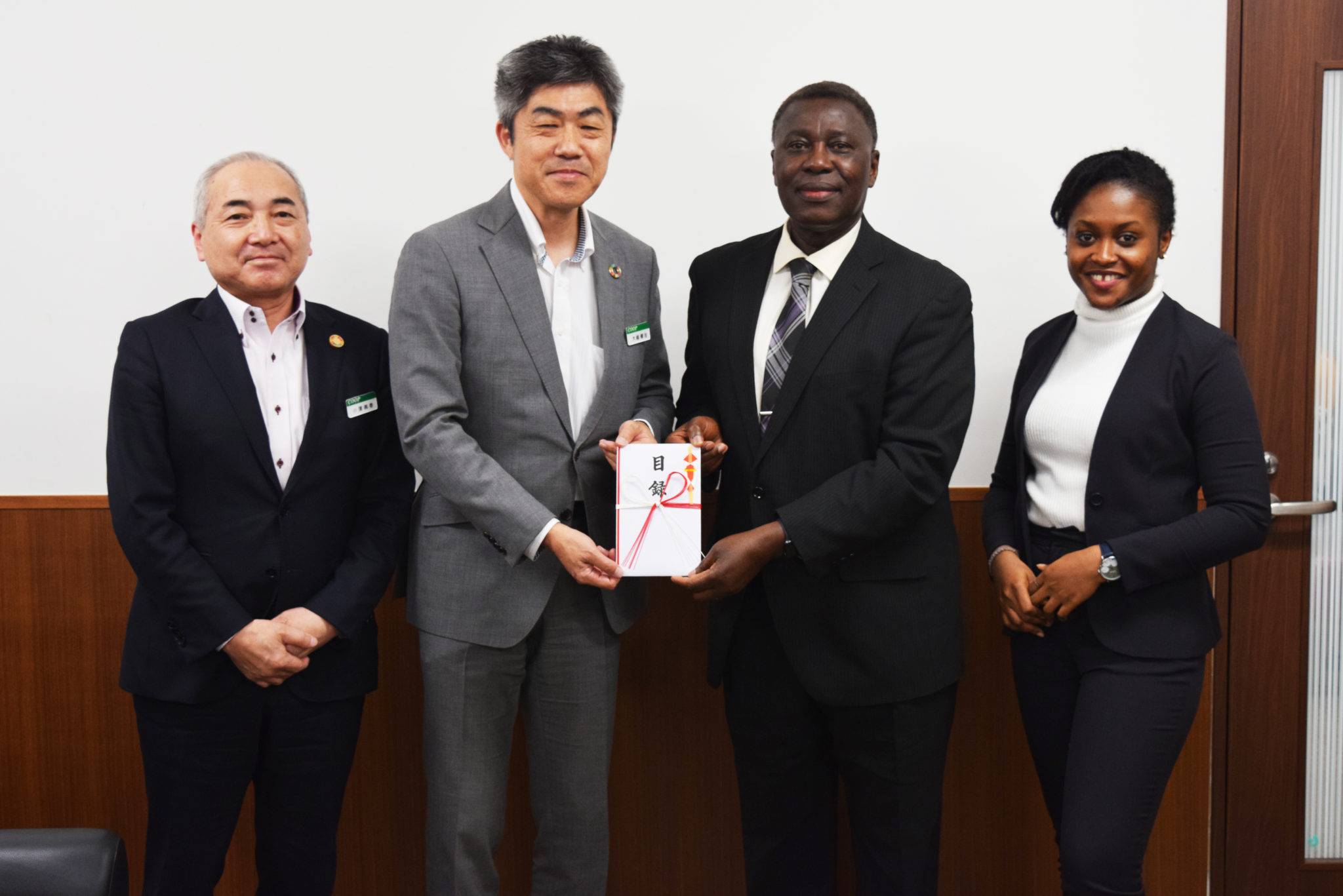
On March 23, 2022, a donation ceremony was held at the Miyagi Co-op head office, marking an important milestone in AFAM’s commitment to improving educational opportunities for children in Africa. During the ceremony, Miyagi Co-op Managing Director and CEO Mr. Kenji Ohkoshi presented Dr. Isaac Asiedu, President of the African Association of Miyagi (AFAM), with a donation of 150,000 yen in support of AFAM’s “Child-Friendly School” initiative at Swedru Secondary School (SWESCO) in the Republic of Ghana.
This support represents more than financial assistance. It is a meaningful expression of solidarity across borders and a recognition of AFAM’s practical role in connecting communities in Japan and Africa through action, compassion, and shared responsibility.
AFAM’s Education Vision
Since 2021, AFAM has been promoting the AFAM Africa Education Initiative (AAEI), a strategic effort aimed at creating an environment in which African children can access quality education in safe, dignified, and supportive learning spaces.
As part of this broader vision, AFAM has embraced and supported the Child-Friendly Schools (CFS) approach initiated by UNICEF. This initiative is not only an educational intervention; it is part of AFAM’s wider commitment to helping shape a future in which African children can learn, grow, and realize their full potential under humane and empowering conditions.
Contributing to Sustainable Development Goal 4
AFAM positions this initiative as a concrete contribution to the United Nations Sustainable Development Goal 4: Quality Education. The organization believes that education is one of the most powerful instruments for social transformation, equity, and long-term development.
By supporting safer and better school environments, AFAM is not merely responding to immediate needs. It is investing in the future of communities by strengthening the conditions under which young people can thrive academically and socially.
Responding to a Real Need
The Child-Friendly School initiative at SWESCO emerged in response to a direct appeal. Last year, AFAM received a request from Swedru Secondary School for support in renovating some of its deteriorating facilities and improving the learning environment for students.
Recognizing the urgency of this need, AFAM acted promptly and reached out to Miyagi Co-op for partnership and assistance. This response reflects AFAM’s way of working: listening carefully to real challenges on the ground, mobilizing support, and transforming concern into practical impact.
The Significance of the Donation
The donation from Miyagi Co-op will contribute to renovation costs aimed at improving the educational environment at SWESCO. It is a tangible step toward making the school more child-friendly, more supportive, and more conducive to effective learning.
During the ceremony, Dr. Isaac Asiedu expressed sincere appreciation for the support, noting the importance of the contribution to AFAM’s Child-Friendly School initiative and to SWESCO’s improvement efforts. Mr. Ohkoshi also expressed the hope that the donation would be put to meaningful use in creating a better learning environment for students.
When a school environment improves, hope expands. Supporting education is not simply about buildings—it is about restoring dignity, possibility, and the future of the child.
Why AFAM’s Work Matters
This initiative demonstrates AFAM’s unique strength as a bridge between communities, institutions, and aspirations. AFAM is not only an association that promotes African culture and Africa–Japan exchange; it is also a purposeful organization that translates dialogue into development-oriented action.
Through initiatives such as AAEI, AFAM is showing that diaspora-led organizations can play a meaningful role in addressing educational inequality, mobilizing partnerships, and supporting long-term development in African communities. The organization’s work stands as an example of how cultural engagement, civic responsibility, and strategic advocacy can come together to produce lasting social value.
A Partnership with Meaning
AFAM deeply values the support extended by Miyagi Co-op. This collaboration reflects a spirit of international friendship grounded not in symbolism alone, but in shared commitment to human development. It is also a reminder that local institutions in Japan can play an important role in contributing to global educational justice through well-targeted partnerships.
By supporting AFAM’s vision, Miyagi Co-op has joined an effort that reaches beyond geography and speaks to a common belief: that every child deserves a school environment that is safe, welcoming, and fit for learning.
Looking Ahead
AFAM will continue to strengthen the AFAM Africa Education Initiative and seek partnerships that expand access to quality education for children across Africa. The Child-Friendly School initiative is one step in a larger mission—one that seeks to ensure that educational opportunity is not determined by circumstance, but supported by collective action and moral responsibility.
As AFAM moves forward, it remains committed to building bridges between Japan and Africa that are not only cultural, but developmental; not only symbolic, but transformative.