Who We Are

About Us

Introducing AFAM

Executives

Introducing our Executives

Activities

What we do

Our Sponsors

Introducing our sponsors

The African Association of Miyagi (AFAM) was established in 2002 to promote social interaction, mutual respect, and deeper understanding between Africans living in Miyagi Prefecture and the broader Japanese community. It is the only officially registered African association in Miyagi, fully recognized by institutions and organizations engaged with African affairs in the region.

AFAM organizes a wide range of activities, including public seminars on Africa’s development, cultural events, and community service initiatives that showcase African values, traditions, and perspectives. These efforts help strengthen local-global connections and foster greater appreciation for Africa’s contributions to the world.

We actively welcome African international students, Caribbeans, and all people of African descent studying in the Tohoku region. AFAM supports their academic and cultural journey in Japan by providing mentorship, networking opportunities, and platforms for cultural expression.

We work in partnership with institutions such as JICA, Miyagi International Association (MIA), universities in Tohoku, and regional businesses to co-host public seminars, organize study tours, and contribute to regional regeneration activities. Our members also participate in local government events and volunteer programs, including visits to nursing homes where we engage senior citizens through music, dance, and intercultural dialogue.

As part of our mission, AFAM serves as a bridge between Africa and Japan, contributing to the internationalization of both Miyagi Prefecture and the wider Tohoku region through cultural diplomacy, educational outreach, and inclusive community engagement.

Vision

AFAM will be the leading voice, cultural ambassador, and knowledge hub of Africa in Japan—connecting communities, inspiring understanding, and showcasing Africa’s rich diversity to Japanese society and beyond.

Mission Statement

The African Association of Miyagi (AFAM) exists to celebrate, connect, and amplify African culture, knowledge, and voices in Japan. We are dedicated to fostering intercultural understanding, empowering African students and professionals, promoting authentic African stories, and serving as a hub for education, news, and cultural exchange. Through collaboration, innovation, and community engagement, AFAM seeks to bridge Africa and Japan, inspire meaningful dialogue, and strengthen the presence and impact of Africa, the Caribbean and African Descent within Japanese society.

Message from the president

It is my great pleasure to welcome you to the official website of the African Association of Miyagi (AFAM). Since its founding in 2002, AFAM has grown into a vibrant and inclusive platform for dialogue, cultural exchange, and collaborative development. As President, I am deeply committed to advancing our mission—not only to serve our members, but to create lasting value across the Tohoku region, in partnership with local governments, academic institutions, private organizations, and the wider Japanese community. At its core, AFAM envisions a future where Africans, Caribbeans, and all people of African descent thrive as active contributors to society, while deepening mutual understanding between Africa and Japan. We seek to empower individuals, build bridges across cultures, and foster leadership through education, social engagement, and community action. Our work goes beyond cultural celebration. Through targeted initiatives—highlighted on our Projects Page—we are engaging in sustainable development, supporting diaspora welfare, and strengthening Africa–Japan relations. Whether it's mentoring students, promoting African innovation, or advocating for global equity, AFAM is a space where ideas become action. As we continue to expand our chapters and outreach throughout the Tohoku region, we invite you to join us, collaborate with us, and walk alongside us in creating a more connected, inclusive, and empowered society. Together, we can transform communities and shape futures—locally and globally. We thank you for your continued cooperation and unwavering support.
Dr. Isaac Yaw Asiedu
President

our Logo

The AFAM Logo: Concept and Designer

For many Africans, Japan can feel like a world apart, and similarly, some Japanese may see Africa as distant—both geographically and culturally. The African community in Japan, particularly in Miyagi Prefecture, strives to bridge this gap. Through voluntary activities and cultural initiatives, AFAM promotes understanding and brings the two communities closer together—a mission reflected in its logo.

In the logo, Africa and Japan are depicted as close, symbolizing that distance is no longer a barrier. Each color carries meaningful significance: red represents the love connecting Africa and Japan across the globe, while the globe itself signifies unity. Black reflects African culture, and white reflects Japanese culture. Notably, Japan adopts black while Africa adopts white in the design, symbolizing mutual cultural exchange. The logo embodies the values of love, exchange, and unity, which guide AFAM’s work.

In November 2016, AFAM launched a contest to design a new logo through its website, receiving an overwhelming response from members. The final design was selected based on online polling and majority vote. We are proud to introduce the winning designer, Abdeli Hamza, and his work.

Abdeli was born in February 1990 in Algeria. He earned a State Engineer Diploma in Electrical Engineering in Algeria and subsequently completed a Master’s degree in Robotics in France. He is currently pursuing a PhD in Robotic Engineering at Tohoku University, conducting research in Professor Shuji Tanaka’s MEMS laboratory.

In his own words:
“I have always been passionate about art and design. Drawing was a hobby in my childhood, and this passion has grown over the years. Today, I enjoy creating designs for logos, posters, and similar projects using a computer, both for fun and as a creative pursuit.”

AFAM Executives - 2023

Under the best of circumstances, we do strategic planning and decision-making for AFAM according to the mission, vision and values of the organization.

AFAM-President

President

Dr. Isaac Yaw Asiedu

VP.jpg

Vice President

Dr. Ismail Issah

IMG-20190511-WA0009.jpg

Vice President (student liason)

Mr ThankGod Ikpe

AngelaAsiedu

Director of Operations

Ms Angela Asiedu

Mr-Sumiyoshi.jpg

Director of Operations

Mr Noboru Sumiyoshi

IMG_20200506_113742-scaled-1.jpg

General Secretary

Ms Ujuagu Akunna Francess

AmelaLokimaBosekwaPeter

Deputy General Secretary

Mr Amela Lokima Bosekwa Peter

WhatsApp-Image-2020-08-16-at-11.38.58-PM.jpeg

Financial Secretary

Mr Weldon Siele

WhatsApp-Image-2020-08-20-at-3.25.42-PM.jpeg

Deputy Financial Secretary

Mr Boubacar Sow

Organizing Secretary

Organizing Secretary

Mr Gideon Vunase

AkiMORI

Deputy Organizing Secretary

Ms Aki Mori

AFAM-WS

Welfare Secretary

Ms Joceylne Nadine

WhatsApp Image 2023-07-02 at 2.33.28 PM

Deputy Welfare Secretary

Jamila Abbas Osman

19-09-26-15-31-24-016_photo.jpg

IT Officer

Mr Isaac Kobina

AFAM-DIT

Deputy IT Officer

Dr. Emmanuel Dansu

Business Activities

1. AFAM Business Initiative

The AFAM Business Initiative (ABI) is one of the priority projects of the Association. ABI aims to strengthen business relations between Africa and Japan, to support African businesses, and to develop budding African business ideas in the Tohoku region.

ABI and Kakehashi Africa Tohoku Chapter have launched a business initiative program in the Tohoku region in 2018 to support the development of business relationships between Africans in the Tohoku region and Japanese companies operating in the region through an internship program.

Objectives

  • To connect Japanese companies with African companies and businesspersons working in the Tohoku region.
  • Introduce a few scholarship recipients from Africa to suitable companies for internships.

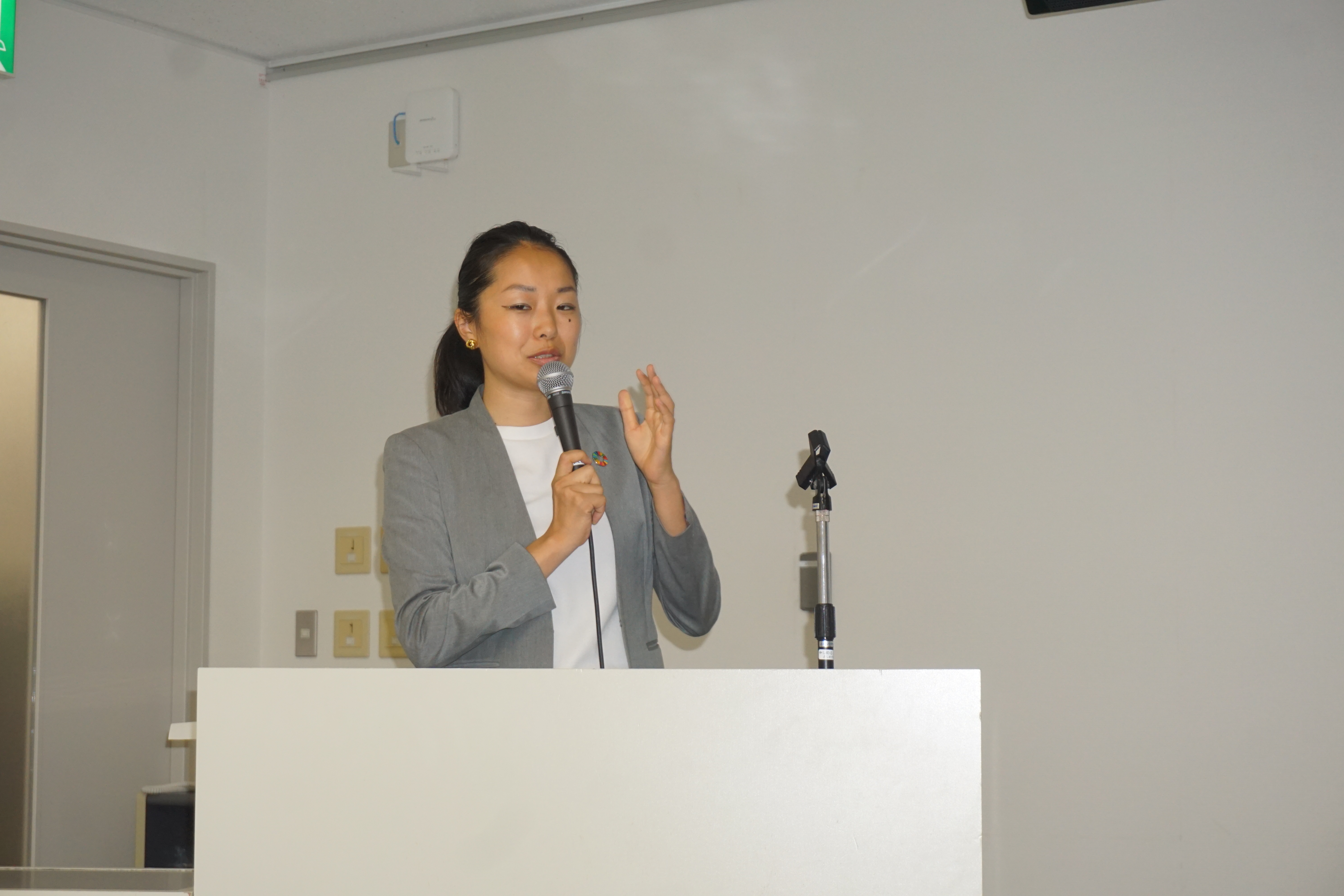
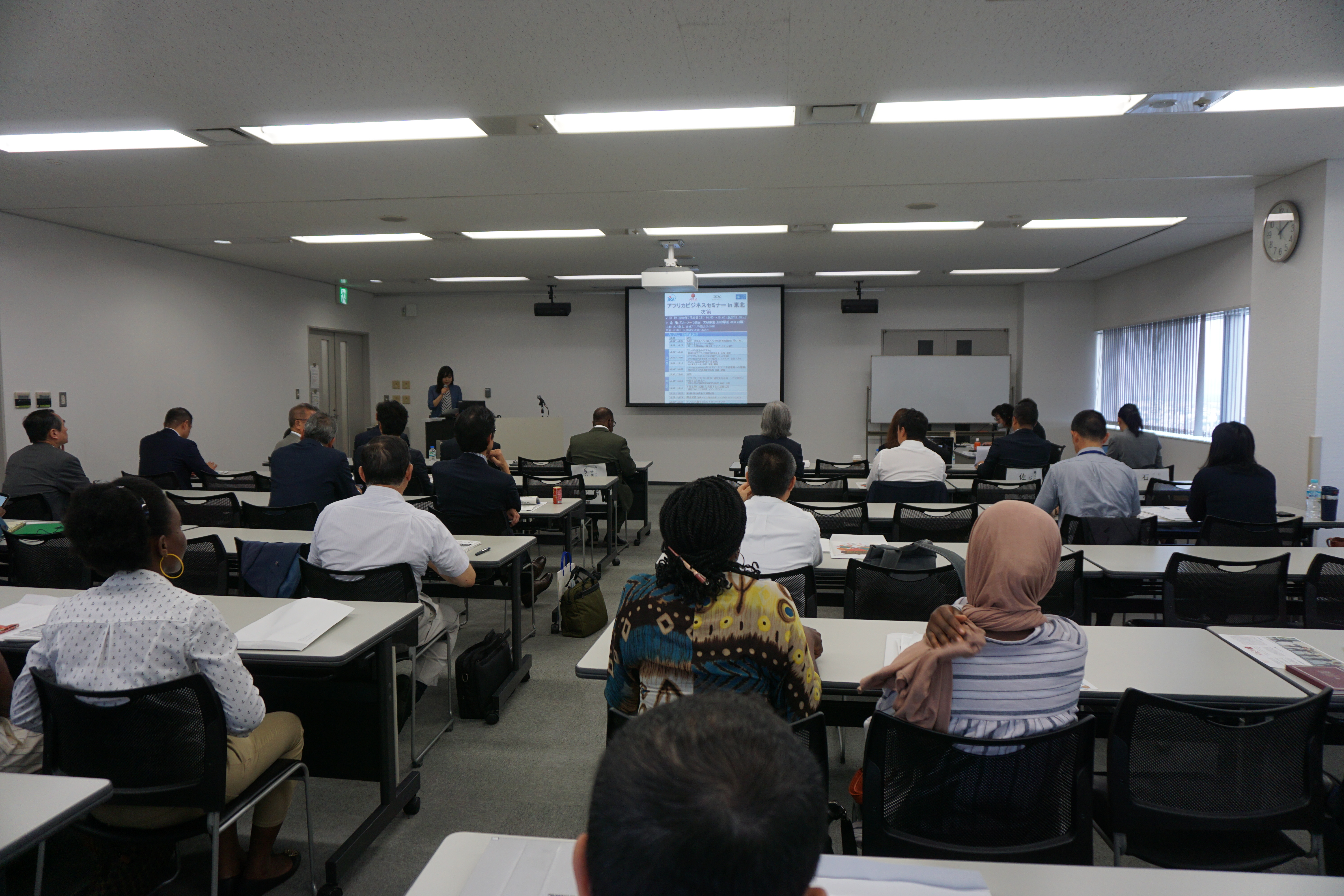
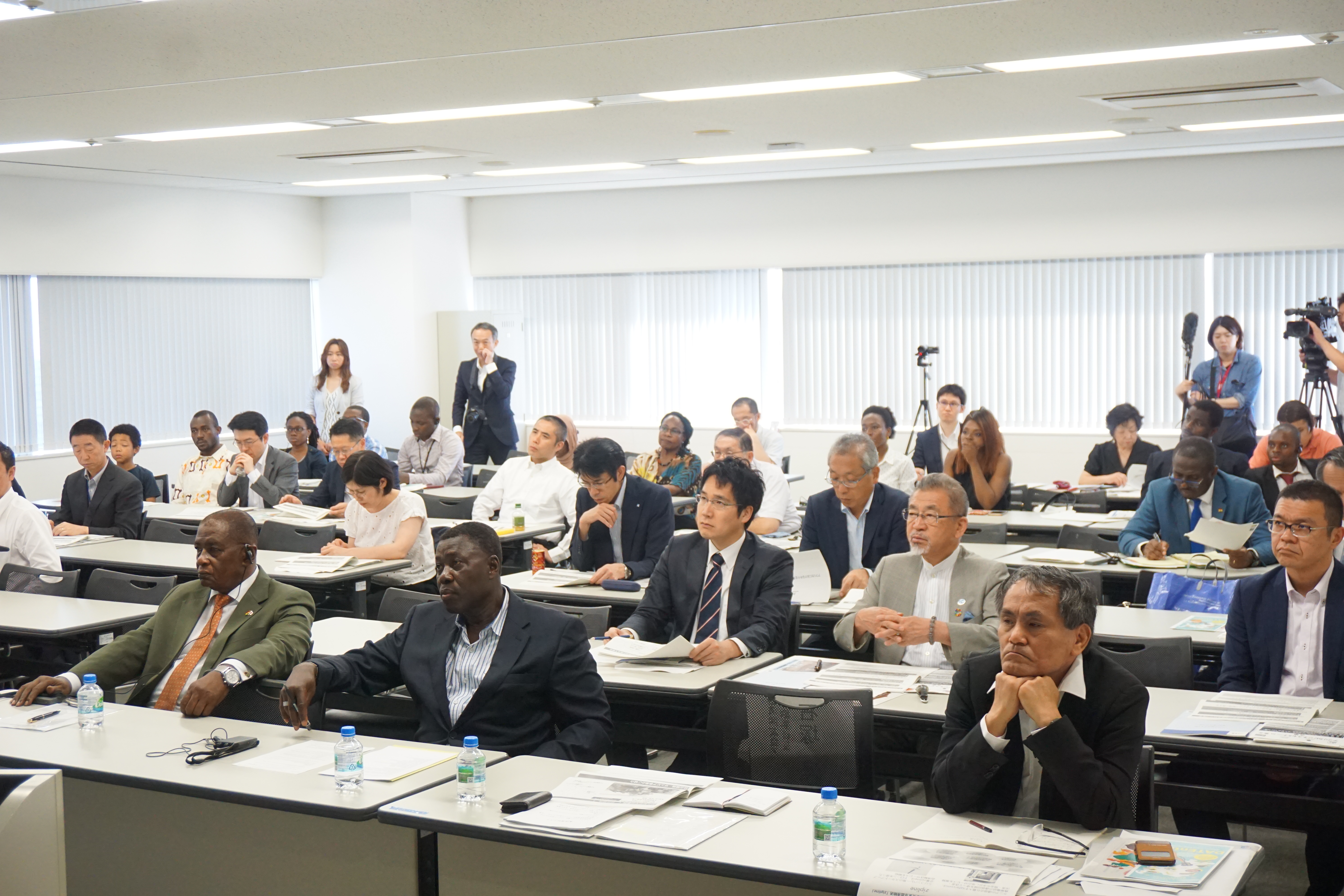
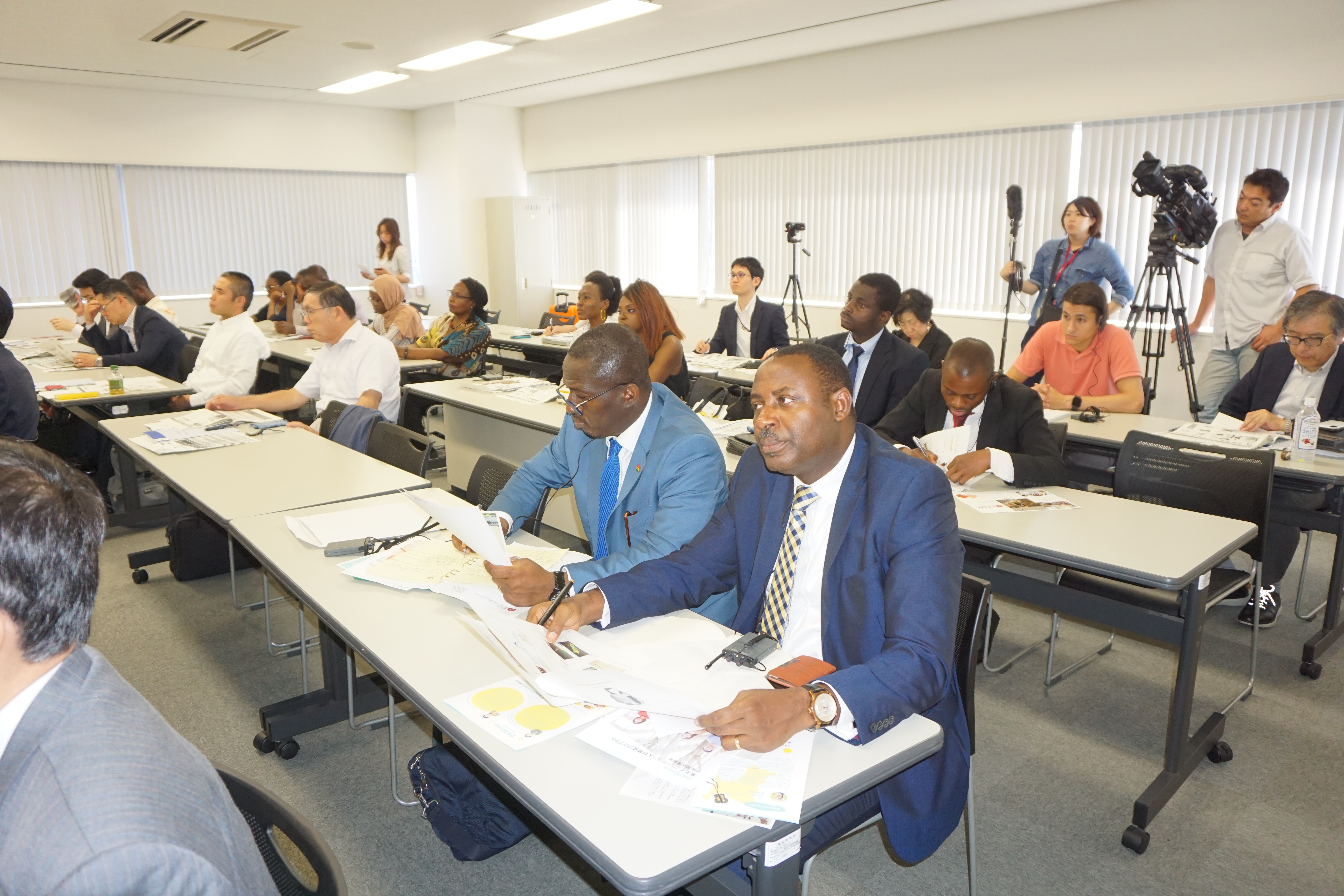
Africa Business Seminar in Tohoku (ABST) - July 2019

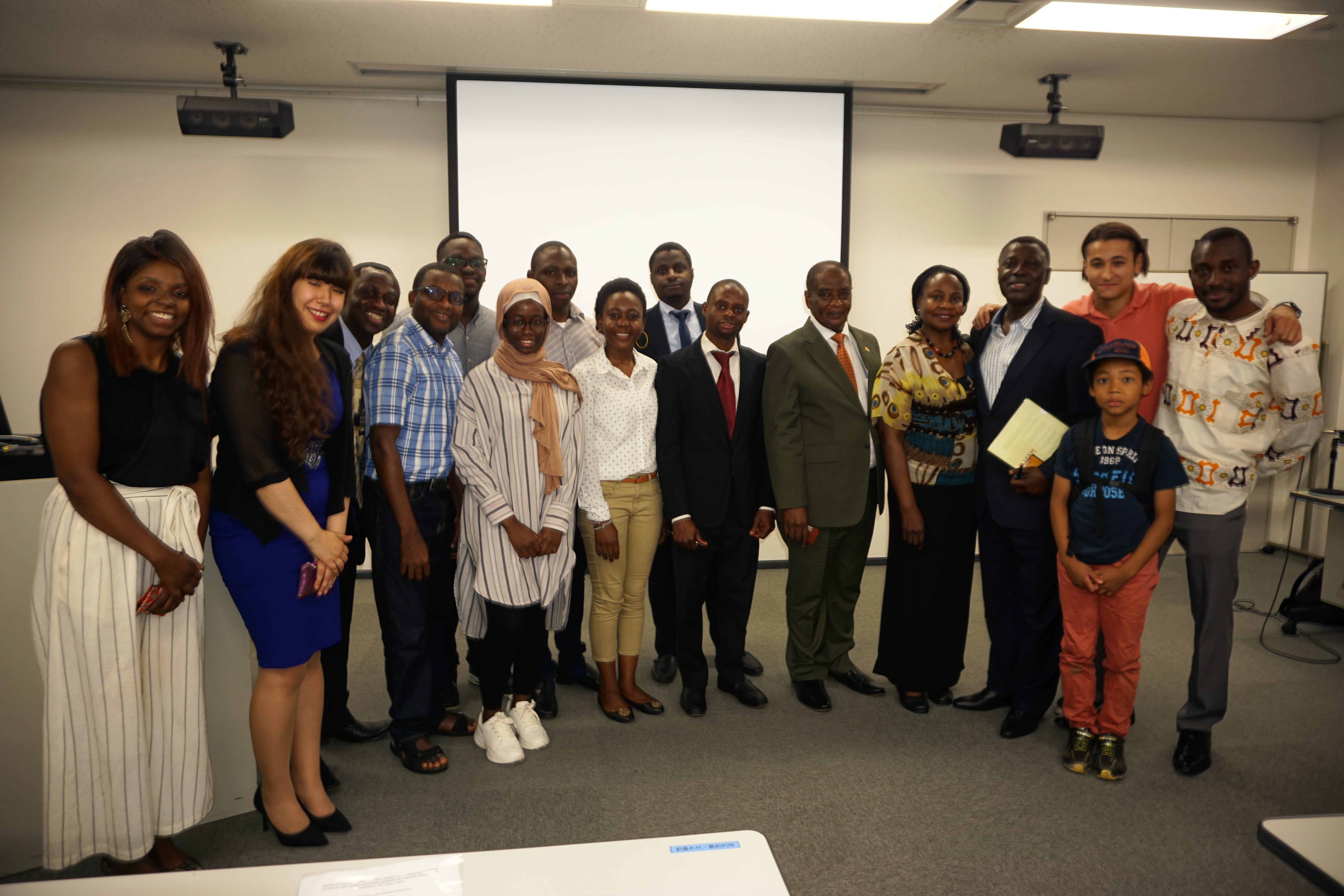
The seminar which was co-organized by the African Association of Miyagi (AFAM) and the Japanese International Cooperation Agency (JICA), and co-sponsored by the Japanese External Trade Organization (JETRO), the United Nations Development Programme (UNDP) and the Japan Association of Corporate Executives had two major aims.
Firstly, it aimed at exposing the Japanese investment community to opportunities in Africa and secondly to connect African students in Japan to Japanese organizations for internship and possible job placement to gain experience in the Japanese business culture.

The seminar was one of the several events organized as pre-event for the 7th Edition of the Tokyo International Conference on African Development (TICAD7) which would take place in Yokohama from 28-30th August, 2019. It was attended by 40 people including 14 company representatives.

By 2.00pm prompt, the seminar commenced with opening remarks by Mr Noguchi Shuji, Senior Regional Coordinatior, Second Africa Division of the Japanese Ministry of Foreign Affairs. He gave a brief history of Africa-Japan cooperation which culminated in the Tokyo International Conference on African Development (TICAD).

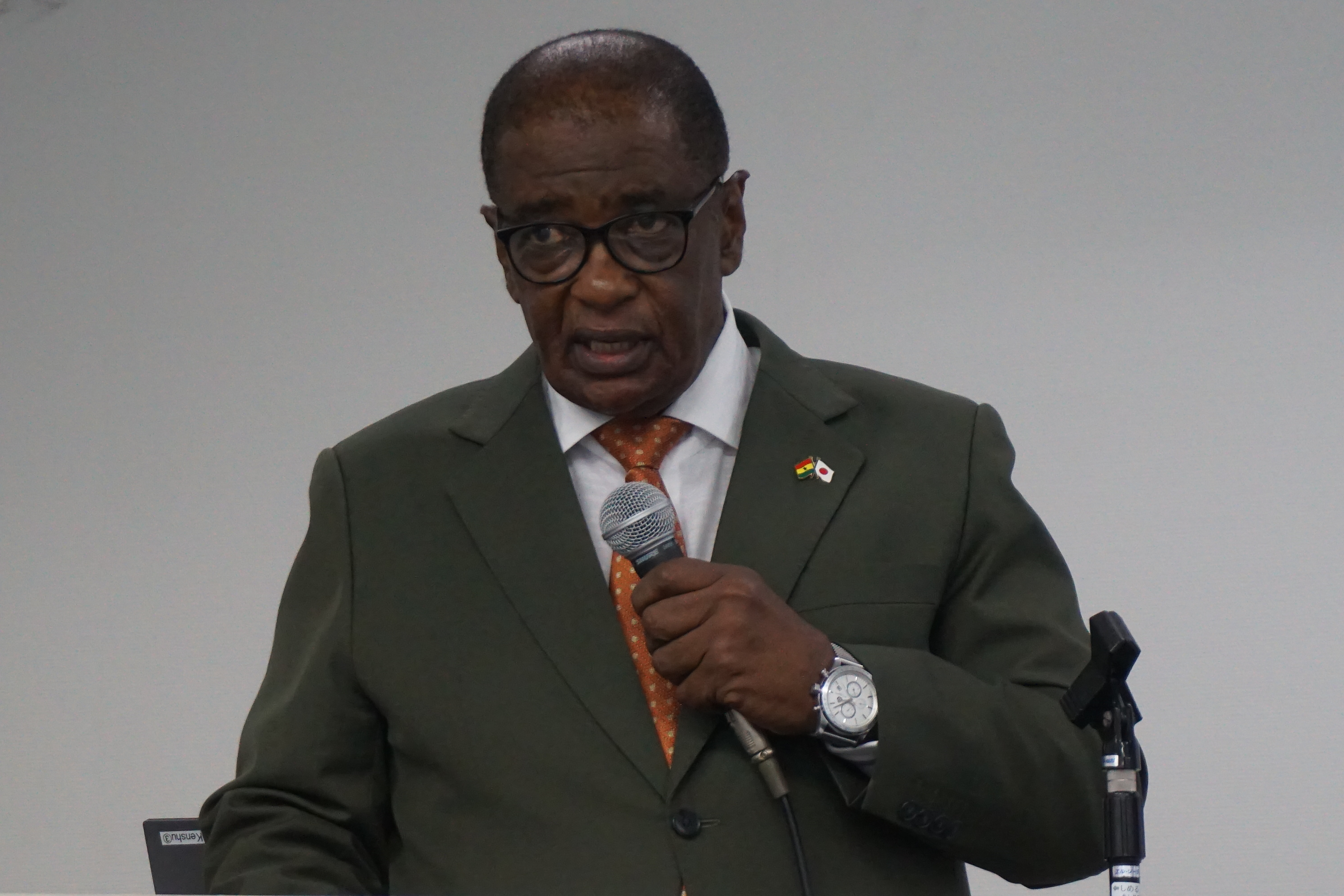
The Ambassador of the Republic of Ghana to Japan, Mr Frank Okyere was up next to talk about Africa’s investment potential and encouraged the private sector and the entrepreneurs in Japan to take advantage of the opportunities that have been created by African Governments and Japan for mutual benefits. He stressed that the Economic Community of West African States Trade Liberisation Scheme (ECOWAS TLS) and the African Continental Free Trade Agreement (AfCFTA) allow business to be done in all the 54 African countries

Advocating for partnerships between Japan and African, Mr Ishizuka Tatsuro, Vice-Chairman of the African Committee for Economic Co-ordination, Japanese Association of Corporate Executives did a quick Strengths-Weaknesses-Opportunities-Threats (SWOT) Analysis about doing business in Africa. He concluded that Africa has a virile and growing youth population with a lot of potentials which should be explored for mutual benefits.

Ms Tomomi Ishida, a Private Consultant at the UNDP Japan Representative Office on TICAD spoke on corporate support for small and medium-sized businesses in Africa. She highlighted that there are lots of business opportunities in line with the Sustainable Development Goals (SDGs) of the United Nations in Africa. She talked about cases of social businesses geared towards improving sanitary conditions by providing potable water and managing waste efficiently.

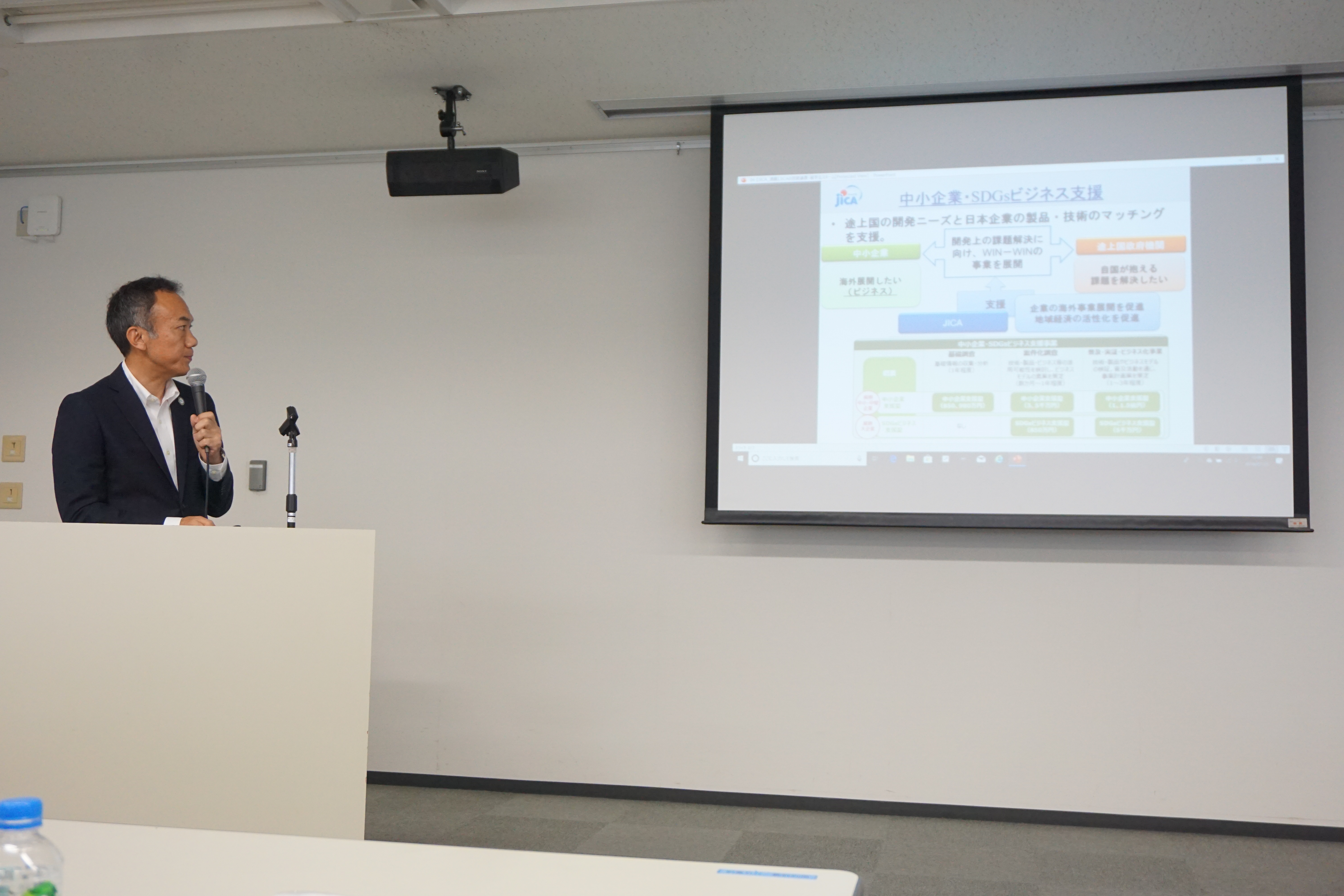
Talking about JICA’s private sector collaboration and relationship with international students, the 1st Director, JICA Tohoku Center, Mr Katsuyoshi Sudo pointed out that the African Business Education (ABE) Initiative for Youths, conducted by JICA, has exposed many African students to the Japanese academic and business environments so that they have taken their acquired skills back to better the African business sphere. He told the Japanese business men in attendance to contact the JICA office should they be interested in having African interns in their companies.

Mr Shunsuke Sato talked about the success story of the Kanedai Namibia Fishing Services headquartered in Kesennuma City, Miyagi Prefecture as a case study of Japanese companies in Africa. His talk was followed by a ten-minute break.

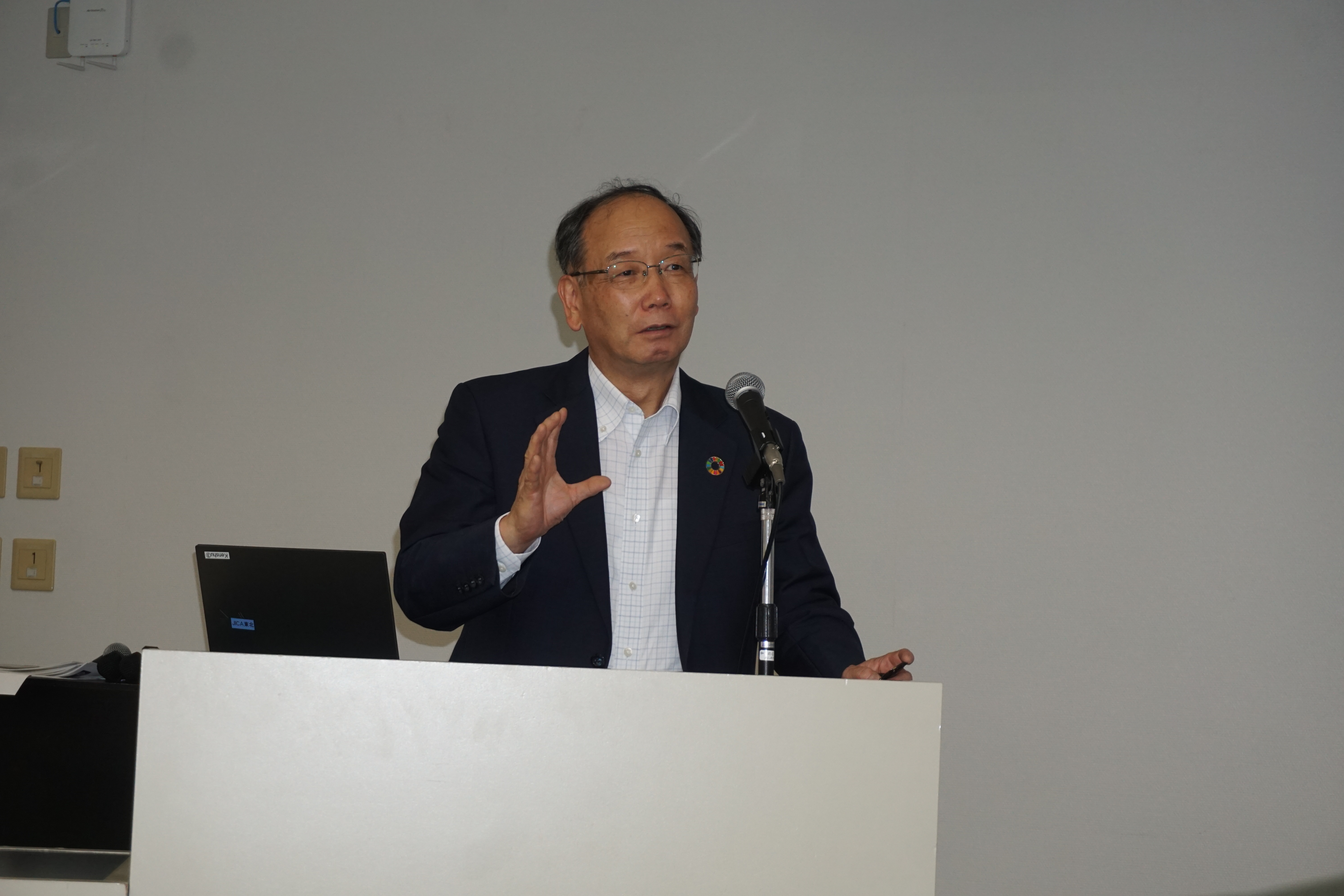
A Professor at the Graduate School of Economics, Tohoku University, Sendai, Akita Jiro took the stage after the break to discuss about the engagement of international students in the Japanese workplace during and after their studies. He intimated the audience with the DATEntre Programme initiated by Tohoku University which was designed to make job search in Japan easy for international students.

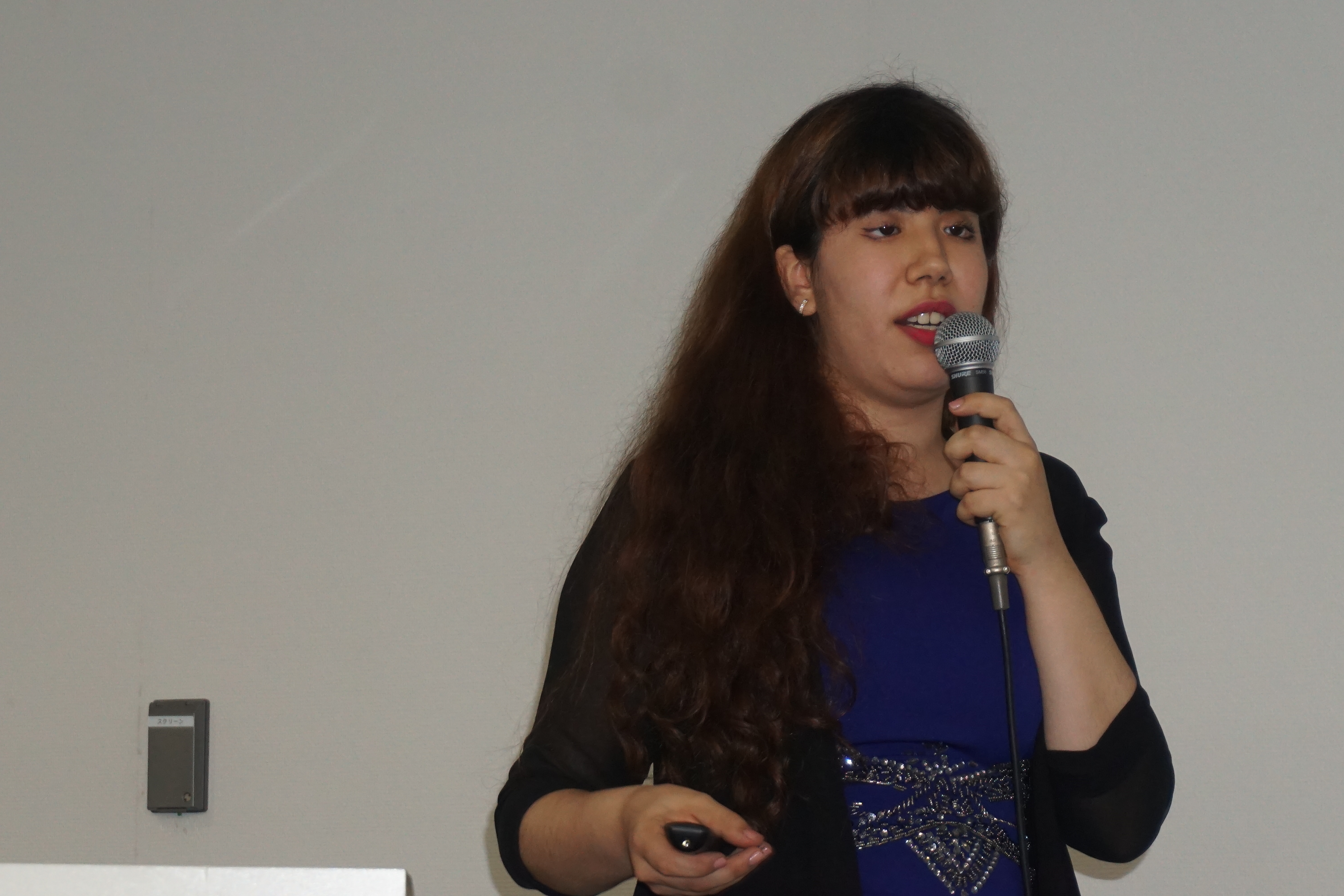
Ms Imane Bouamama, an ABE Initiative alumna from Morocco and a member of AFAM, who now works with Armonicos Co. Ltd. in Tokyo gave her perspective as a former student who transited to the Japanese work environment. She explained that she and some other ABE Initiative alumni had started publishing a magazine called ‘African Mags’ to tell stories that bridge the gap between the Japanese society and Africa. Furthermore, she talked about her future plan of spearheading Armonicos Morocco.

The closing remark was given by Dr. Isaac Yaw Asiedu, President of African Association of Miyagi (AFAM), after which there was a networking session for all attendees. The seminar came to a close around 4.45pm.


2. AFAM Global Poverty Initiatives (AGPI)

AGPI is an AFAM support group that directly engages the AFAM community in the fight against global poverty especially in Africa in support of UN’s 2030 Agenda for Sustainable Development Goals (SDGs) that pledges to “leave no one behind”.
AFAM Alumni in various places in Africa have the resources, the passion, and the ingenuity to help tackle the problems of poverty. AGPI aims to support them in using that opportunity to make a difference.
AGPI would engage the AFAM community in organizing annual Poverty Action Week to raise funds to support the initiative as well as seeking donation from organizations or individuals who align with this initiative.

3. AFAM Africa Education Initiative (AAEI)

Helping to create a conducive environment to educate every African child.

AFAM is working to support the promotion of Child Friendly Schools (CFS) in Africa. Japan and the rest of the world are working towards achieving the Sustainable Development Goals (SDGs), and AFAM has started working on projects to achieve SDG4 “Quality Education” and SDG6 “Clean Water and Sanitation” in Africa.

AAEI aims to support basic education up to secondary school level across Africa by offering assistance in the following areas:

  1. Supply of refurbished laptops that are preloaded with low cost operating systems such as Linux. In the past, we have worked on supporting computer installation in Akure, Nigeria.
  2. Assist bright students who are facing financial challenges in their education.
  3. Assist schools to embark on renovations and/or expansion of school facilities.
  4. Any other assistance that will go a long way in improving basic education in Africa.

To achieve these, AAEI seeks to solicit donations in cash or in kind from benevolent individuals and organizations who align with our goals for helping to create conducive environment to educate every African child.

Below is a report link to a donation made to Swedru High School in Ghana by Miyagi Co-op (https://www.miyagi.coop)

 https://afam-org.com/2022/03/30/child-friendly-school/

https://afam-org.com/2022/05/10/child-friendly-school-presentation/

4. AFAM Student Housing Service

AFAM tries to understand the needs of students who are looking for rooms and the welfare committee helps students find safe and secure housing that offers many advantages based on their requirements, such as closeness to the university, cheap rent and good security. AFAM provides support after the student found a room, by giving information on mover, furniture, etc.
AFAM has a network of real estate agents who understand the needs of foreign students.
Students looking for a new house or apartment can fill out the online application form below.

    Our Sponsors

    COOP Miyagi

    MIA

    SenTIA

    Jica

    Scroll to Top