
By Dr. Isaac Yaw ASIEDU – AFAM President.
1. Introduction: A Turning Point for Africa’s AI Future
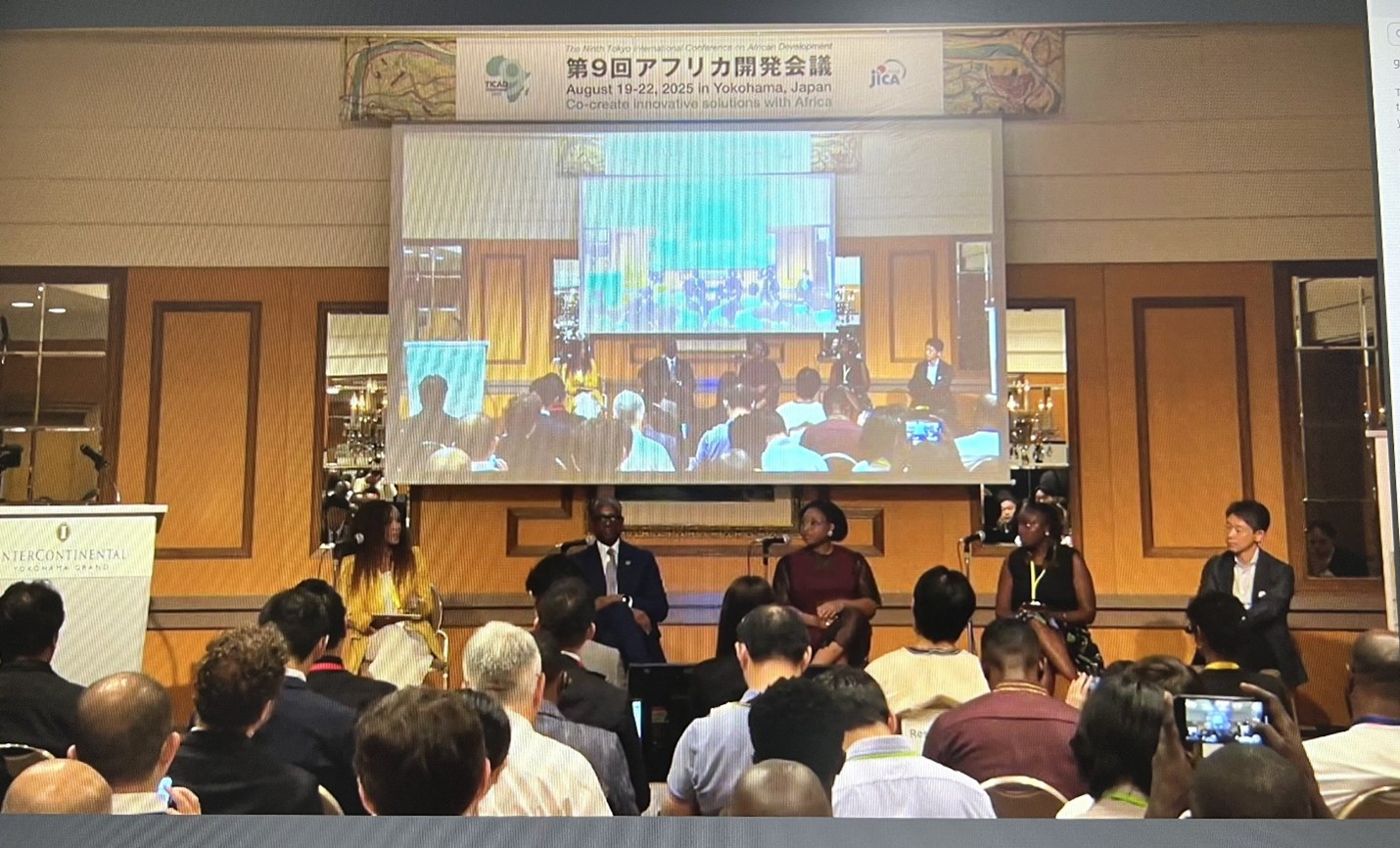
The 2025 AI and Africa Seminar, jointly organized by JICA, UNDP, the World Bank, and academic partners such as the University of Tokyo’s Matsuo Lab, served as a landmark convening of policymakers, entrepreneurs, and scholars to explore the intersection of artificial intelligence (AI), human capital, and inclusive development across the African continent. With simultaneous interpretation in Japanese, English, and French, the seminar was not just an intellectual exercise—it was a strategic forum for redefining Africa’s place in the global digital economy. Framed around Japan’s Society 5.0 vision—a future where digital, physical, and social systems are integrated—the event highlighted both Africa’s unique opportunities and structural constraints in the age of intelligent technologies.
2. Opening Vision: Society 5.0 Meets African Realities
In his keynote, Mr. Naoki Ando, Senior Vice President of JICA, emphasized AI’s potential to drive inclusive, human-centered development. This theme resonated throughout the seminar as UNDP officials and African government representatives offered compelling real-world examples: from using AI to predict droughts in Kenya, reduce traffic congestion in Kinshasa, to boost crop yields for smallholders in South Africa. Japan’s Society 5.0 model—a fusion of digital transformation with social equity—was proposed as a fitting framework for Africa’s digital future.
3. Key Themes and Insights
a. AI Applications Across African Sectors
AI is already playing a transformative role in:
• Education: Platforms that compress years of learning into weeks.
• Healthcare: AI tools for maternal health, diagnostics, and pandemic detection.
• Agriculture: Climate prediction models, soil diagnostics, and crop optimization.
• Urban Planning: AI-driven traffic systems and resource allocation tools.
b. Infrastructure and Investment Commitments
Despite representing 18% of the world’s population, Africa hosts less than 1% of global data center capacity. The World Bank committed $6 billion to address this gap, complemented by new initiatives:
• AI Hub for Sustainable Development (launched with Italy, covering 14 countries).
• Africa Green Computer Coalition for sustainable computing.
• AI Infrastructure Builders Program to scale digital connectivity.
c. Human Capital and AI Talent Development
Africa contributes just 1% of global AI talent, a stark mismatch given its demographic strengths. Japan’s Matsuo Lab committed to training 30,000 African AI professionals in three years through:
• A global-standard AI curriculum.
• Pan-African hackathons and youth innovation challenges.
• Academic exchanges and joint research with African institutions.
• A clear message: AI alone doesn’t change society—people do.
d. Local Innovation and Language Inclusion
Africa is not merely adopting AI—it is building its own models:
• Lelapa AI (South Africa) develops transcription/translation tools for African languages with 55% less compute power than global benchmarks.
• Community initiatives like Masakhane and Deep Learning Indaba show Africa’s capacity to create context-aware AI, rooted in local realities.
e. AI Startups and Entrepreneurial Landscape
A survey revealed 75+ active AI ventures in Africa, with hubs in Nigeria, South Africa, Kenya, Ghana, Egypt, Morocco, and Tunisia. Focus areas:
• Data & analytics (22 ventures)
• Chatbots and virtual assistants (21)
• Vision applications (16)
• Language/text recognition (16)
• Others include health diagnostics, robotics, and AI hubs
This growing ecosystem reflects vibrancy, though its fragmentation calls for strategic coordination.
4. Candid Reflections: Panel Questions That Mattered
Participants did not shy away from raising hard questions:
1. Brain Drain: How can Africa retain its AI talent?
2. Youth Skills: What digital competencies are essential for young Africans?
3. Language Diversity: Should AI platforms aim for all 2,000+ African languages or prioritize a few?
4. Jobs vs. Automation: Can AI create enough employment, or will it displace millions?
5. Startup Ecosystem: How can African startups drive localized, scalable innovation?
These concerns underscore the tension between AI’s potential and its disruptive risks, especially in a continent with fragile infrastructure and urgent employment needs.
5. Challenges Confronting AI in Africa
Several structural hurdles were identified:
• Infrastructure Gaps: Inadequate power supply, internet connectivity, and data centers.
• Governance Deficits: Absence of clear AI regulatory frameworks on ethics, privacy, and inclusion.
• Funding Shortfalls: Limited investment in AI research and computing infrastructure.
• Inclusion Risks: Potential exclusion of rural populations and linguistic minorities.
• Employment Dilemma: Risk of automation outpacing job creation in youth-heavy societies.
6. Emerging Opportunities for AI-Driven Growth
Despite the hurdles, Africa stands on the cusp of transformation:
• Demographic Advantage: By 2050, Africa will have the world’s largest youth population.
• Leapfrogging Potential: AI allows Africa to bypass legacy development models.
• International Alliances: Japan, UNDP, and the World Bank are aligning with African institutions.
• Startup Ecosystems: Local entrepreneurship offers a base for scalable innovation.
• Policy Innovation: Africa can define context-sensitive governance models, rather than importing external templates.
7. Commentary and Analysis
a. Africa-Centered Innovation
The success of Lelapa AI and Masakhane proves that Africa can lead in AI innovation, not just consume imported technologies. Local context matters—and African talent is rising to meet it.
b. Japan’s Society 5.0 as a Strategic Model
Japan’s human-centered, integration-focused model of AI—balancing technology with social cohesion—offers an alternative to Western market-driven and Chinese state-led approaches. For Africa, this emphasis on human capital and co-creation is highly relevant.
c. The Challenge of Implementation
While commitments (like training 30,000 professionals and building AI hubs) are promising, the real test lies in delivery. Past development programs show that rhetoric must be matched with consistent, on-the-ground follow-through.
d. AI as a People-Centered Technology
Participants repeatedly noted: value is local. AI must be embedded into local institutions, languages, and business models. Without inclusion and integration, AI becomes a buzzword rather than a tool for change.
e. Africa’s Crossroads Moment
This seminar marked a strategic inflection point. The right blend of governance, partnerships, innovation, and youth empowerment can position Africa as a global contributor in the AI economy, not just a passive recipient.
8. Conclusion: Will AI Be Shaped for Africa or by Africa?
The 2025 AI and Africa Seminar was more than an event—it was a clarion call. It made clear that:
• AI’s success in Africa hinges not on technology, but on people, policy, and purpose.
• Japan, with its Society 5.0 ethos, is positioning itself as a long-term partner in skills development, not just infrastructure provision.
• Africa’s leaders and citizens must claim ownership of the AI agenda—ensuring that intelligent technologies serve inclusive development goals, promote job creation, and preserve cultural diversity.
Artificial Intelligence in Africa is no longer a futuristic ideal, it is an unfolding present. The continent’s next challenge is not whether to adopt AI, but how to ensure that its development is locally anchored, inclusively governed, and globally competitive.
Africa’s AI future is being written today. The choice is clear: will it be shaped for Africa—or by Africa?
This article draws on the proceedings of the 2025 Seminar on AI, Human Capital, and Inclusive Growth, co-hosted by JICA, UNDP, the World Bank, and academic institutions, as part of JICA’s thematic events for TICAD9.