
By Isaac Y. Asiedu – President, African Association of Miyagi (AFAM)
Introduction:
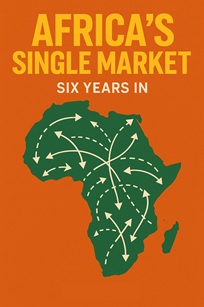
Six years ago, African leaders launched a bold experiment: to knit the continent’s fragmented economies into one vast, borderless trading bloc. That vision—now known as the African Continental Free Trade Area (AfCFTA)—promised to unleash a new era of prosperity by creating the world’s largest single market in terms of membership.
Since its signing in Kigali in 2018, AfCFTA has made significant strides, navigating global headwinds and internal bottlenecks to lay the groundwork for a new era in African trade. Yet, for all the ambition, the road to full implementation is far from complete.
From Idea to Implementation
AfCFTA officially came into force in May 2019 after 22 countries ratified the agreement. A year later, in January 2021, trading under AfCFTA rules began. The launch was mostly symbolic—core elements like final tariff schedules and product-specific rules of origin were still under negotiation. But it marked a turning point: Africa had committed to trading more with itself.
Since then, over 88% of rules of origin have been agreed upon. Tariff offers have been exchanged, pilot trade initiatives launched, and tools like the Pan-African Payment and Settlement System (PAPSS) introduced to ease cross-border transactions in local currencies. These steps—while technical—are crucial to making AfCFTA a functioning market.
Why AfCFTA Matters
The numbers speak for themselves. Intra-African trade currently accounts for just 15% of total trade—far lower than Europe (60%) or Asia (50%). AfCFTA aims to double that by reducing tariffs, eliminating non-tariff barriers, and harmonizing trade rules across the continent.
Beyond trade, AfCFTA is a tool for industrialization, job creation, and economic resilience. It can reduce reliance on external suppliers, especially in sectors like pharmaceuticals, food, and digital services. It also empowers Africa’s youth and women entrepreneurs, many of whom operate in the informal economy.
Progress and Pain Points
Over the past six years, progress has been real but uneven. While some countries have embraced the agreement with enthusiasm, others have moved slowly, worried about local industries being undercut or losing tariff revenues.
Infrastructure remains a major bottleneck. Poor roads, ports, and rail networks hamper trade efficiency. Customs procedures are still inconsistent. And digital connectivity—vital for modern trade—is patchy at best.
Non-tariff barriers (NTBs), like arbitrary inspections, licensing delays, and corruption at borders, continue to stifle the free flow of goods. While the AfCFTA Secretariat has launched an online NTB reporting mechanism, enforcement remains weak.
A Broader Agenda
AfCFTA isn’t just about goods. It covers trade in services, investment protection, intellectual property rights, and competition policy. In 2023, protocols in these areas were adopted, signaling a shift from foundational work to deeper integration.
The service sectors prioritized—finance, communications, transport, tourism, and professional services—have the potential to unlock rapid growth, especially when supported by smart regulation and digital platforms.
There’s also a growing focus on inclusive trade. Initiatives supporting women-led businesses and youth enterprises are gaining traction. These efforts are vital to ensure that AfCFTA isn’t just top-down policy, but a catalyst for grassroots opportunity.
What’s Next
AfCFTA’s future depends on action—not just intention. Here’s what’s needed in the next phase:
- Finalize the Framework: Complete negotiations on outstanding tariff schedules and rules of origin.
- Build Infrastructure: Invest in trade corridors, ports, and digital infrastructure to link African economies.
- Enable the Private Sector: Streamline customs, reduce NTBs, and offer incentives to African manufacturers and exporters.
- Leverage Digital Trade: Fast-track the e-commerce protocol to enable SMEs to sell across borders with ease.
- Strengthen Institutions: Equip dispute resolution bodies, enforce trade rules, and monitor implementation rigorously.
The Bigger Picture
The AfCFTA is Africa’s single most important economic initiative of the 21st century. If implemented effectively, it could raise incomes, attract investment, and reduce poverty. But the transition from paper to practice is messy, political, and slow.
Still, the trajectory is promising. In a world increasingly fractured by geopolitical tensions and protectionism, Africa’s choice to unite economically is not just visionary—it’s necessary.
The next six years will define whether AfCFTA becomes a game-changer or just another grand plan that never lived up to its potential. The building blocks are there. Now it’s time to build.
AFAM welcomes your insights. Share your views on AfCFTA’s progress and potential. Email us at: contact.afam@afam-org.com